Japanese Promos
CoroCoro Promos
コロコロコミック プロモ
Before booster packs reached Japan, Pokémon cards came bound into a children's manga magazine. Kids peeled them out of the appendix of CoroCoro Comic. The first card ever printed came out this way, five days ahead of the first Japanese base set, and the magazine kept giving away cards for another five years.
That is why this "set" behaves unlike any other. There are no card numbers, no set symbol and no official checklist — just 36 cards collectors agreed on afterwards, issued one or four at a time between 1996 and 2001.
Start here
Was the CoroCoro Pikachu really the first Pokémon card?
Yes — the glossy Ivy Pikachu, on sale October 15 1996. No confirmed PSA 10 of it has ever surfaced out of 1,400+ graded, and telling a real glossy from a mislabelled slab comes down to one detail on the card.
Read the full story →The full 36-card checklist
Ordered by issue. "On sale" is when that issue actually hit Japanese shelves, which is usually the month before the cover date. Difficulty is a 1–5 ranking of how hard the card is to obtain at all, not a price.
| Photo | Card | Issue | On sale | Difficulty | Find one |
|---|---|---|---|---|---|
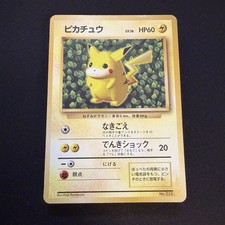 Ask $430.00 | Pikachu (Glossy) The first Pokémon TCG card. Credits Ken Sugimori in error; the non-glossy reprint corrected it to Keiji Kinebuchi. | November 1996 | October 15, 1996 | 2/5 Uncommon | |
 Ask $250.00 | Jigglypuff (Glossy) Same peel sheet as the Pikachu. One confirmed glossy PSA 10 known. | November 1996 | October 15, 1996 | 2/5 Uncommon | |
 Ask $114.99 | Mew (Glossy) The first Mew card, known as Lilypad Mew. | February 1997 | January 1997 | 2/5 Uncommon | |
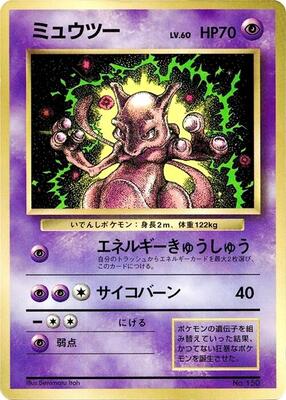 Image: TCGplayer | Mewtwo (alternate artwork) | June 1997 | May 1997 | 2/5 Uncommon | |
 Ask $75.00 | Surfing Pikachu (Glossy) | September 1997 | August 1997 | 3/5 Hard | |
 Ask $6,970 | Imakuni? Notoriously off-centre. Single-digit PSA 10 population. | September 1997 | August 1997 | 5/5 Brutal | |
 Ask $39.98 | Flying Pikachu | November 1997 | October 1997 | 3/5 Hard | |
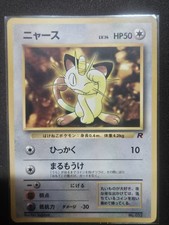 Ask $13.00 | Meowth | January 1998 | December 1997 | 4/5 Very hard | |
 Ask $10.35 | Computer Error (Glossy) | January 1998 | December 1997 | 5/5 Brutal | |
 Ask $11.99 | Brock's Onix | March 1998 | February 1998 | 5/5 Brutal | |
 Ask $12.98 | Misty's Staryu | March 1998 | February 1998 | 5/5 Brutal | |
 Ask $19.98 | Cubone | April 1998 | March 1998 | 4/5 Very hard | |
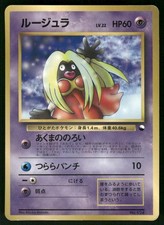 Ask $18.98 | Jynx | April 1998 | March 1998 | 5/5 Brutal | |
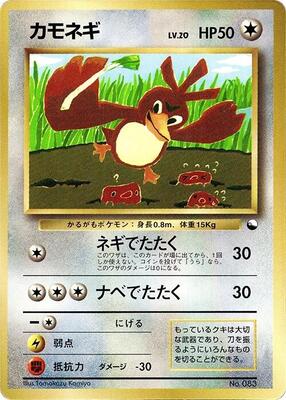 Image: TCGplayer | Farfetch'd | April 1998 | March 1998 | 5/5 Brutal | |
 Ask $12.49 | Lt. Surge's Electabuzz | August 1998 | July 1998 | 5/5 Brutal | |
 Ask $19.95 | Erika's Dratini | August 1998 | July 1998 | 5/5 Brutal | |
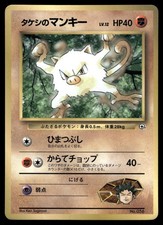 Ask $10.00 | Brock's Mankey | December 1998 | November 1998 | 5/5 Brutal | |
 Ask $49.98 | Erika's Bulbasaur | December 1998 | November 1998 | 5/5 Brutal | |
 Ask $10.79 | Misty's Tentacool | December 1998 | November 1998 | 5/5 Brutal | |
 Ask $29.99 | Lt. Surge's Jolteon | December 1998 | November 1998 | 5/5 Brutal | |
 Ask $19.99 | Meowth (second print) | February 1999 | January 1999 | 5/5 Brutal | |
 Ask $31.99 | Blaine's Growlithe | March 1999 | February 1999 | 5/5 Brutal | |
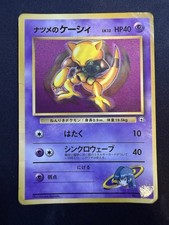 Ask $19.99 | Sabrina's Abra | March 1999 | February 1999 | 5/5 Brutal | |
 Ask $1,200 | Pikachu (English, grey star) English-language card released only in Japan. Among the most sought-after in the set. Photo shows the WoTC black-star print — the grey-star variant is identical except the star color. | April 1999 Bessatsu | March 1999 | 1/5 Findable | |
 Ask $1,295 | Jigglypuff (English, grey star) Seven PSA 10s known. Photo shows the WoTC black-star print — the grey-star variant is identical except the star color. | April 1999 Bessatsu | March 1999 | 1/5 Findable | |
 Ask $49.99 | Togepi | June 1999 | May 1999 | 5/5 Brutal | |
 Ask $14.98 | Marill | July 1999 | June 1999 | 5/5 Brutal | |
 Ask $24.99 | Giovanni's Nidoking | August 1999 | July 1999 | 4/5 Very hard | |
 Ask $12.00 | Koga's Ninja Gym | August 1999 | July 1999 | 5/5 Brutal | |
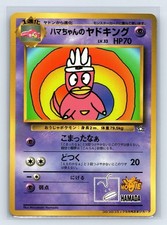 Ask $145.00 | Hama-chan's Slowking | September 1999 | August 1999 | 5/5 Brutal | |
 Ask $44.98 | Wooper | January 2000 | December 1999 | 5/5 Brutal | |
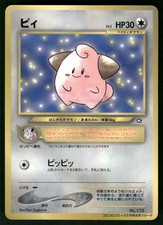 Ask $19.98 | Cleffa | February 2000 | January 2000 | 5/5 Brutal | |
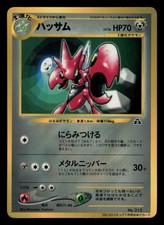 Ask $17.99 | Scizor | July 2000 | June 2000 | 5/5 Brutal | |
 Ask $99.99 | Unown R For years the only way to complete the Unown alphabet. | November 2000 | October 2000 | 5/5 Brutal | |
 Ask $48.73 | Smoochum | December 2000 | November 2000 | 5/5 Brutal | |
 Ask $12.00 | Shining Mew Last card in the set and the most graded by a wide margin. | May 2001 | April 2001 | 1/5 Findable |
Photos and asking prices come from the current lowest-priced live eBay listing for each search — an ask, not a sold price, and not a verified reference image. Check the card against the checklist notes before buying.
Rows without a live listing show a stock reference scan from TCGplayer's catalog instead — that is what the card looks like, not a card currently for sale.
Affiliate links — we earn a small commission at no extra cost to you.
Buying CoroCoro promos: what to know
- Bends, not creases, are what kill these. Thirty years compressed inside a thick magazine leaves damage a flat scan cannot show. Ask for photos under a hard light at an angle before buying raw.
- Check the illustrator credit on any glossy Pikachu. The 1996 glossy is an error card crediting Ken Sugimori; the later non-glossy reprint corrected it to Keiji Kinebuchi. A "glossy" slab showing Kinebuchi is mislabelled.
- Titles are wrong in both directions. With no set symbol and no card number, sellers guess. Bargains and fakes both hide behind bad titles, so search sold comps for the same card spelled several ways.
- Peeling destroys the magazine's value. A sealed-appendix issue is worth a large multiple of the cards inside it. Decide which one you are buying before you bid.
- The reprints are not the same cards. Several of these were reissued through Asobikata Magazine and other channels on non-glossy stock. They are far easier to grade and far cheaper — fine to own, but know which one you paid for.
All CoroCoro promos on eBay
On cards this thin and this old, sold comps are the only honest price guide
Affiliate links — we earn a small commission on eBay purchases at no cost to you.
FAQ
How many cards are in the CoroCoro promo set?
PSA treats 36 cards as the accepted checklist, issued between November 1996 and May 2001, and that is the list on this page. Some collectors count 37. Neither is wrong: the set was never announced in advance. Cards shipped one or four at a time for five years inside a manga magazine, and collectors drew the boundary afterwards.
What is the first card on the CoroCoro checklist?
The glossy Ivy Pikachu from the November 1996 issue, which went on sale October 15 1996 — five days before the first Japanese base set. It shipped on a peel-out sheet alongside the glossy Jigglypuff, and it is the first Pokémon TCG card ever printed.
Which CoroCoro promos are hardest to find?
24 of the 36 sit at the top difficulty rank, mostly the 1998–2000 Gym-era and Neo-era cards: Brock's Onix, Misty's Staryu, Jynx, Farfetch'd, Koga's Ninja Gym, Unown R, Wooper, Cleffa and Smoochum. These had no reprint, no set symbol and no card number, so they rarely surface with correct listing titles. The Pikachu, Jigglypuff, Mew and Shining Mew are the easiest, because they were printed in the magazine's highest-circulation years.
Why are these cards so hard to search for on eBay?
CoroCoro promos carry no set symbol and no card number, so sellers title them however they like — sometimes as base set cards, sometimes just as "Japanese promo". The searches on this page are deliberately long-winded for that reason. Always check sold comps rather than asking prices, and expect several searches to return nothing exact at any given moment.
Is the Pikachu Illustrator a CoroCoro card?
Yes, but not one you could peel out of an issue. It was the prize in a CoroCoro illustration contest in 1998, which is why only a few dozen exist. It is not on the 36-card checklist because it was awarded rather than distributed with the magazine.
Should I buy a graded CoroCoro card or a raw one?
Graded, unless you can inspect the raw card under a raking light. These cards spent decades compressed inside thick magazines, which produces bends that do not show up in a flat scan. On the glossy Pikachu specifically, verify the illustrator credit even on a slab: the 1996 glossy printing credits Ken Sugimori in error, and slabs labelled glossy that show Keiji Kinebuchi are mislabelled non-glossy copies.
Nobody is buying 1996 promos at MSRP. Modern sealed is a different story.
These cards have one price: whatever the last person paid. Current product still lands at retail every week — the catch is that a drop clears in under a minute, so it goes to whoever got pinged. Running restock alerts, we have caught something on every Pokémon Center drop for the past 12 months.
Affiliate disclosure: we earn a commission if you subscribe — never any extra cost to you.
Sources
- PSA Set Registry — CoroCoro Comic Promos article and population report
- PokeBoon — CoroCoro promo difficulty ranking (issue and on-sale dates)
- Elite Fourum — CoroCoro set thread and glossy Pikachu population investigation